Home / Blog / Where to Find Licensed Salon Suite Listings That Meet Cosmetology Board Rules
Where to Find Licensed Salon Suite Listings That Meet Cosmetology Board Rules
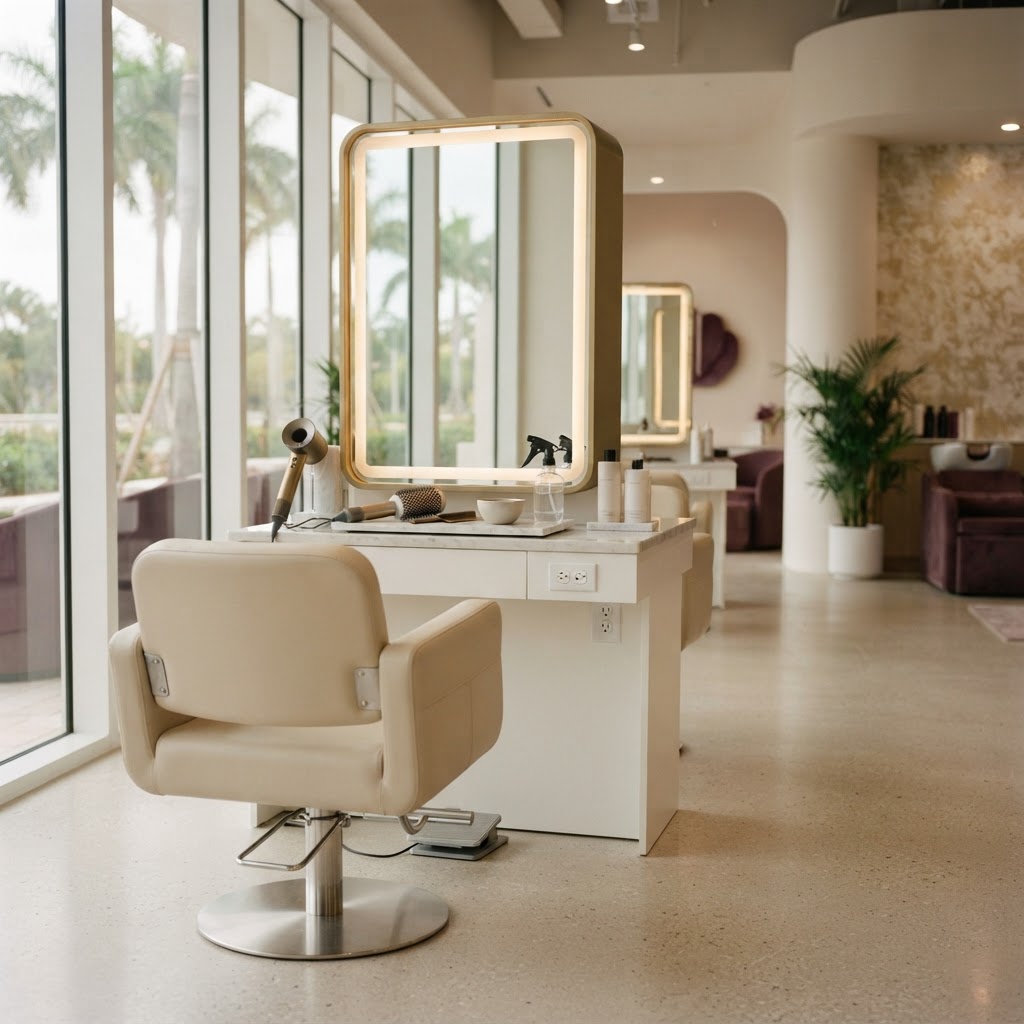
A licensed salon suite listing is one where two separate licenses both exist and both check out: the facility's salon or establishment license, and your own practitioner license. Before you pay a deposit on any chair, booth or suite, verify both. In Florida you can confirm a salon license and a practitioner license for free in about two minutes through the Department of Business and Professional Regulation's public license lookup. If the space you are looking at cannot produce an active facility license number, that is not a listing detail you can negotiate around. It is the whole question.
This matters more for flexible and day-rate space than it does for a traditional long-term lease, because the entire point of short-term access is that you are moving between locations. Each new address is a new compliance question, and most pros never ask it.
What "Licensed" Actually Means in a Listing
The word gets used loosely in salon space listings. It usually means something vague about the host being a nice person with a nice salon. Legally, it means two distinct credentials, and they belong to two different parties.
1. The facility license
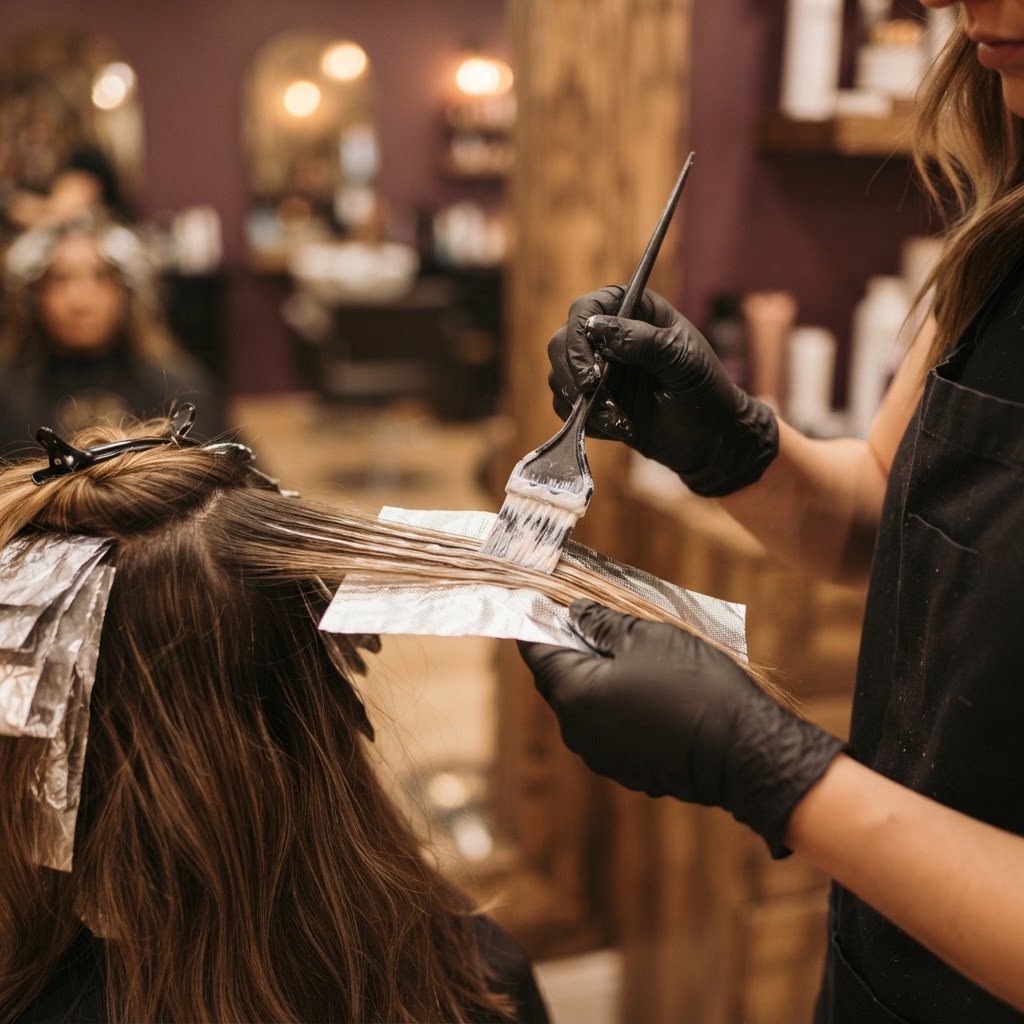
Florida issues a Cosmetology Salon license (license type CE, applied for on form COSMO 6). The state's own definition is worth reading slowly: a cosmetology salon is "a licensed and inspected facility where the practice of cosmetology is conducted by licensed persons." Every clause in that sentence is a requirement. The facility is licensed. It has been inspected. The people working in it are licensed.
Salon licenses renew on November 30 of every even year, which is a useful detail. A salon that quietly stopped operating still shows up in some listings and directories long after its license lapsed. Status matters as much as existence.
2. Your practitioner license
Florida separates practitioners by trade: cosmetologist (CL), facial specialist (FB), nail specialist (FV), and full specialist (FS). The state is explicit that facial and nail specialist services "must be performed in a licensed salon." That sentence removes the ambiguity people hope for. If you are an esthetician or a nail tech, working out of an unlicensed room is not a gray area you can manage carefully. It simply falls outside what your registration permits.
Some states also restrict the booth-rental model itself, which is a separate issue from whether a given room is licensed. If you are moving between states or considering a market you have not worked in, check that first: is booth rental illegal in any state covers which states restrict the arrangement and what the alternatives are.
Five Checks Before You Pay a Deposit
Run these in order. The first three take minutes. The fourth and fifth prevent most of the disputes that actually happen.
Check 1: The facility license number, and its status. Search the address in the state lookup. You want a salon license with a status of Current or Active, tied to the address you are actually booking. A license attached to a different address is not the license for that space. Florida's COSMO 6 checklist reportedly treats a change of location, name or ownership as requiring a new salon application and voiding the previous license, so a licensed salon that relocated may still be operating under a record that no longer matches the premises.
Check 2: Whether your specific trade is permitted on site. Cosmetology, facials and nails are licensed separately in Florida. A salon licensed and equipped for hair is not automatically set up for waxing, lash work or nail services, and the ventilation, plumbing and sterilization requirements are not the same. Ask what trade the space is licensed and equipped for, not whether it is "a salon."
Check 3: Who the named licensee is, and whether that is who you are paying. The name on the license should connect to the person or business collecting your money. If a stranger is subletting a room inside someone else's salon, that is a question to resolve before money moves, not after.
Check 4: Insurance, yours and theirs. You need your own professional liability coverage, because a salon's policy does not cover your work. Ask what the host carries as well. GlamSpace requires professional licensing (attestation on file) and insurance from the professionals who book through the platform.
Check 5: Written terms. Rate, durations offered, what is included in the rate, cancellation and notice expectations. A verbal arrangement is the most common source of the disputes that end professional relationships.
The Math When a Space Is Not Actually Licensed
Illustrative Example. A stylist books an attractive day-rate room at $70 per day, four days a week, which is roughly $1,213 per month at 4.33 weeks. She pays a $600 deposit to hold it and works there for seven weeks before discovering the facility license lapsed the previous year. Actual earnings depend on pricing, demand, occupancy, availability and other factors, and this figure is illustrative, not a GlamSpace earnings claim.
Her direct money loss is the deposit plus whatever she cannot recover, which in this case is $600 plus partial rent, call it $1,450. That is the cheap part. The expensive part is that her clients sat in a chair she was not licensed to work in, which is the kind of finding that can put a practitioner's own license in front of a board. Add rebooking a displaced clientele, and the true cost of skipping a two-minute lookup runs well past a month of rent. The lookup is free. The mistake is not.


What a Listing Should Tell You Before You Book
A usable listing answers the compliance question without prompting. It names who holds the space, states the city and the trade the space is set up for, and gives you a real rate for real durations. On GlamSpace, durations run from a two-hour minimum through four-hour blocks, full days, weeks and months, with the full rate visible before you commit and a transparent platform fee shown at checkout. Hosts keep 100% of their listed rate, and the fee is added on top rather than taken out of the host's number.
You should also know how booking works before you rely on a space for a Saturday. Hosts approve booking requests, or they can switch on instant booking for their listing, which is the host's choice either way. If you are booking a bridal party two months out, confirm the approval path so you are not guessing at forty-eight hours' notice.
Where Flexible Space Fits Without Adding Risk
None of this argues against traditional booth rent. A stylist with consistent demand and a full book often does better with permanent space, and a host may well want a steady monthly renter alongside flexible bookings. Permanent when permanent makes sense. Flexible when flexible makes sense.
The compliance logic does favor flexible arrangements in one specific way: they make it easy to test a location before you commit to it. A stylist entering a new market, working two days a week, covering a guest schedule, or scaling from one chair toward a suite can book the days they actually need and see how the space, the neighborhood and the client flow behave. What you should never do is treat flexibility as a reason to skip the license check. If anything, moving between spaces more often means running the check more often: where a hairstylist can legally take clients without leasing a suite walks through the legal routes, and salon suite lease terms when scaling from one chair to a suite covers what changes when you do decide to commit.
If you are on the other side of this and hold the space, the same logic is a selling point. A host who can name the salon license, describe the trade the room suits, and quote a clear rate gets booked faster than one whose listing is a photo and a phone number. Those standards are exactly what what to require before allowing an independent stylist into your salon is built around.
Frequently Asked Questions
Can I rent a salon suite if I only hold a cosmetology license?
Yes, if the suite sits inside a properly licensed facility and you are practicing the services your license covers. What you cannot do is work in an unlicensed room and rely on your personal license to make it compliant. The facility license is a separate requirement from yours.
How do I check whether a salon is licensed?
Use your state board's public license lookup. In Florida that is the DBPR license verification search, which lets you search by license number, name, city or county, and license type. Confirm the record shows an active status and matches the address you are booking. The search is free and takes about two minutes.
Does GlamSpace verify that hosts are licensed?
GlamSpace requires professional licensing and insurance from the beauty professionals who book, with an attestation on file. Hosts enter their own listing information and it goes live when they do. As a professional, you should still run your own license check on any facility before you pay a deposit, in the same way you would verify a landlord before signing a lease.
What if the salon license expired between bookings?
Stop working there until it is reinstated. Florida salon licenses renew on November 30 of even years, and a lapsed or closed salon license is a problem for everyone practicing in the space, not just the owner. Ask the host for the current record rather than assuming the renewal went through.
Do I need my own insurance if the salon has coverage?
Yes. The salon's policy covers the salon's exposure, not your professional work. Carry your own professional liability coverage and keep the certificate current.
Refer and Earn
Know a stylist searching for flexible space, or a salon owner with chairs sitting empty? The GlamSpace Affiliate Program pays you $5 for every beauty professional you refer — and they get a $5 booking credit toward their first booking. Join the affiliate program free.
Take GlamSpace With You
Beauty Pro? Book professional salon space only when you need it—without full-time booth rent or a long-term lease. Find salon space on GlamSpace
Salon or Suite Owner? Your empty chair can earn without becoming another full-time commitment. You control the rate, availability and every booking. List your unused salon space free
Download GlamSpace on the Apple App Store — get the app on Google Play. Or explore GlamSpace on the web.
Sources: Florida Department of Business and Professional Regulation, Board of Cosmetology license types and definitions (myfloridalicense.com); DBPR online license verification search. Licensing requirements vary by state; verify with your own state board.
Ready to find your next salon space?
GlamSpace connects beauty professionals with verified daily chair rentals across the country.